Mini Dental Implants Versus Traditional Implants
Today, people have options, including a mini dental implant and traditional implants. While the two sound alike, they are actually quite different and serve different purposes. If you have missing teeth but do not want to wear dentures, find out if you make a good candidate. Based on the recommendation, you can move forward to achieving a beautiful smile.
Comparing a mini dental implant to traditional implants
Starting with a mini dental implant, a dental professional suggests this for people who wear dentures. However, this implant is also ideal for patients without adequate bone density to support traditional implants. That means an individual can go this route for one or more missing teeth or to avoid having dentures that slip.
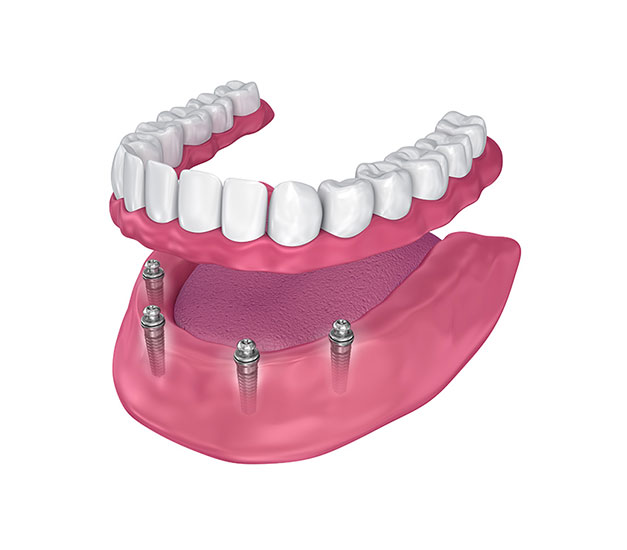
A significant difference between a mini dental implant and a traditional implant is that the mini version is much smaller. In fact, it is about half the size. When used to keep dentures firmly in place, it serves as an anchor with an O-ring. As a result, people no longer have to worry about slippage or messy adhesives.
The procedure
The procedure is also different. With traditional implants, an oral surgeon makes an incision in the gum. Then, the dental professional attaches a titanium screw. After several weeks of healing, the patient returns to the dentist’s office to have the artificial tooth attached. For this, a patient can go with several different types of implants. One of the most popular is the “all on four,” which means all the implants anchor to just four screws.
In the case of a mini dental implant, there is no need for an incision; therefore, no stitches. The implant is so small that an oral surgeon can insert it without cutting. Another difference is that traditional implants have a second component known as an abutment. A mini dental implant is one piece that simply screws into the jawbone.
The design
For people who wear dentures, a mini dental implant works incredibly well. On top of this one-piece device is a ball that offers support. Then a rubber O-ring attached to the dentures slides over the ball, which is what prevents the slippage. Even as a replacement tooth, the mini version is easier to place and less painful, and it costs less compared to traditional implants.
What it comes down to
The two main differences between a mini dental implant and a traditional implant are that the mini version is much smaller and in one piece. For someone with poor bone density or who wears dentures, the mini implant is ideal. It is also a great choice for someone with small teeth or just one or two missing teeth.
Finally — a solution for you
If you do not need traditional implants or you have dentures and worry about slippage, consider a mini dental implant. In many cases, a dentist can complete the procedure in one visit. With no downtime, you will look and feel great right away. If this sounds like something of interest, consult with your dentist today.
Request an appointment here: https://newyorkdmd.com or call New York DMD at (917) 284-9680 for an appointment in our New York office.
Recent Posts
Dental veneers can transform your smile. However, while veneers are built to last as long as possible, they are not permanent. Their lifespan depends on the type of veneer, daily care, and a few lifestyle habits. A better understanding of those factors makes it easier for you to know what to expect over time.Most porcelain…
A restorative dentist can fill gaps in the smile with tooth replacements that restore comfort and confidence. Losing even one tooth can make it difficult to enjoy your favorite foods, speak clearly, or smile without hesitation. It can also affect the way the remaining teeth fit together over time. With dental implants, a restorative dentist…
Implant supported dentures stabilize the bite and allow you to enjoy a diverse menu without the constant fear of an appliance slipping out of place. Traditional removable options often slide during meals, causing irritation and limiting nutritional choices. This restoration anchors the prosthetic teeth directly to dental implants for maximum security. Here is everything you…
Tooth extractions often serve as the essential starting point for a dental implant when a tooth is too damaged or infected to support a healthy smile. While the idea of losing a natural tooth feels like a minor setback, this step clears the way for a more permanent and reliable replacement. Our general dentist focuses…